

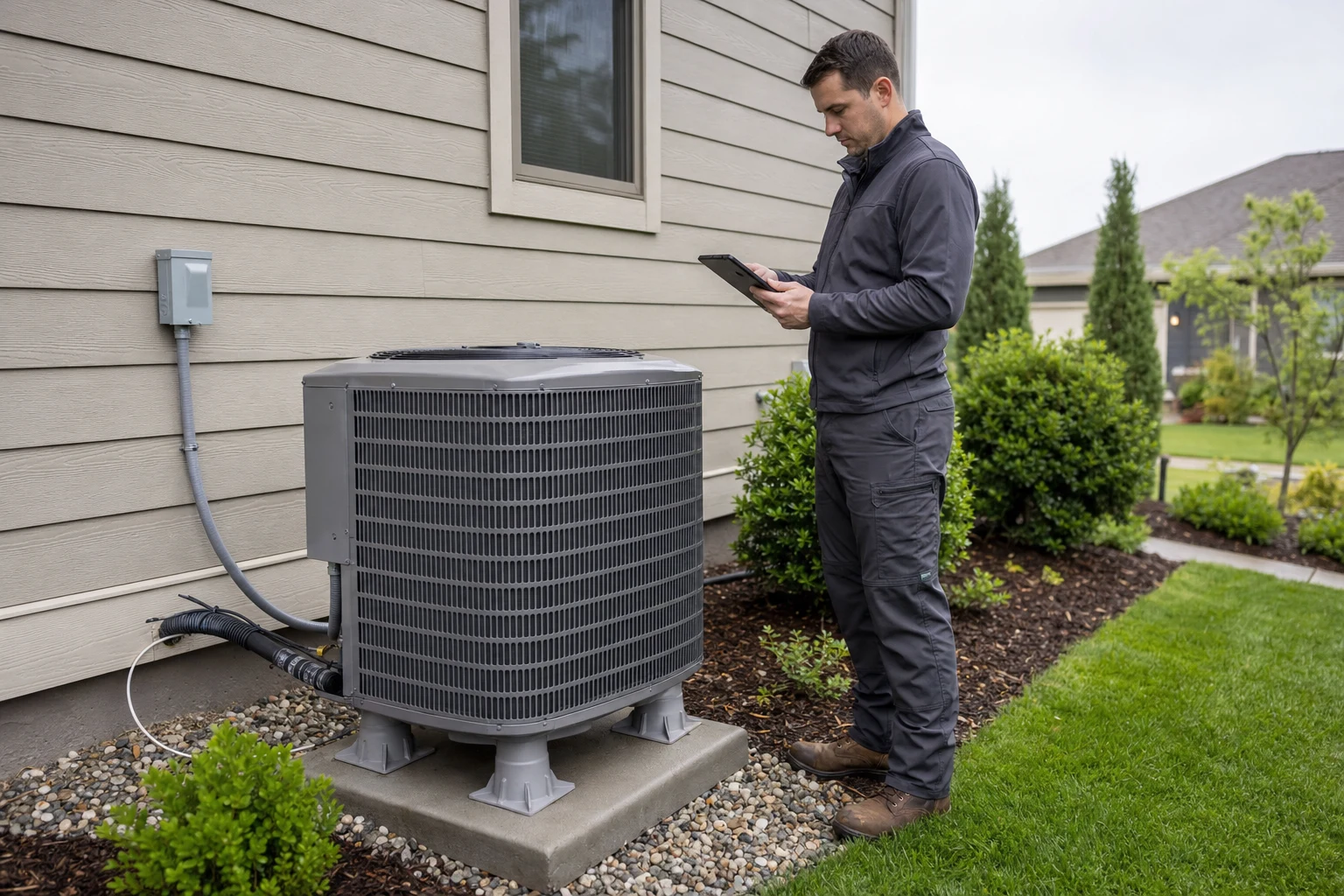
A refrigerant transition is not only a technical issue for the field. It changes what the office needs to ask, what the customer can reasonably expect, and which technician or appointment window fits the work. When intake stays generic, the wrong details reach dispatch and the booking takes longer to correct.
Why this matters now
The US Environmental Protection Agency lists a January 1, 2025 restriction date for many new residential and light-commercial air-conditioning and heat-pump systems above the applicable GWP limit. Contractors still need to evaluate the equipment in front of them, but the transition makes model, age, refrigerant, service history, and symptom more useful during intake.
For an A2L-era call, the useful outcome is not a refrigerant guess. It is a dispatch-ready record that helps the office choose the right service path without asking the caller to diagnose equipment.
Where the workflow usually fails
The caller rarely knows the refrigerant
Asking a homeowner to diagnose the equipment creates confusion. Intake should request observable details such as system type, approximate age, model information when available, and the actual symptom.
Not every technician or truck fits every call
A generic open slot can create a second scheduling problem. The workflow should match the request to approved skills, service area, duration, and inventory rules.
Price questions need boundaries
The call handler should explain the approved diagnostic or dispatch policy and avoid inventing a repair price before the equipment is evaluated.
A better operating path
Build the intake from facts a caller can observe to decisions the office is qualified to make. Equipment details inform routing; approved skill, territory, duration, and escalation rules determine the next action.
- Identify the equipmentAsk for equipment type, age, model photo or number when available, and whether it is cooling or heating.
- Capture the symptomRecord what the customer sees, hears, smells, or experiences without turning the intake into technical advice.
- Apply booking rulesMatch the request to technician capability, territory, duration, and approved service windows.
- Prepare the handoffSend the technician a concise record so the visit starts with useful context.
Test the path with a caller who has no model number, equipment installed at different times, an unavailable specialist, and a request for a repair price. Those cases show whether the script gathers useful context without crossing into diagnosis.
What to measure
The useful measures show whether intake improves the first dispatch decision. Call volume alone cannot tell the team whether the right technician received enough context.
- Bookings that required rescheduling
- Calls missing model or equipment details
- Time from first contact to confirmed appointment
Compare these measures for relevant calls before and after the script change. Review every reschedule and missing-detail case with dispatch so the questions stay short and useful.
The implementation decision
Update scripts and booking rules before demand peaks. A short, accurate intake is more valuable than a long technical interrogation, and every exception should have a clear human review path.
Implementation checklist
- Review current EPA guidance and local requirements with qualified advisers
- List equipment details a customer can observe or provide
- Define job types that require specialist review
- Match each job type to skills, duration, territory, and inventory rules
- Approve pricing, safety, and escalation language for intake
- Audit reschedules, missing details, and technician corrections
Field checks before launch
For A2L-related HVAC intake, start with the operating facts that determine a usable outcome: equipment type, refrigerant context, service history, symptoms, property access, and whether the caller is reporting an active safety concern. Write down which system owns each fact, which answers are required, and what the customer may be promised.
The workflow should collect facts and route the request. It should not diagnose equipment, interpret codes, or tell the caller how to handle refrigerant. Document that boundary in the script, interface, and fallback path so staff can understand why a request was booked, routed, or held for review.
Run realistic acceptance tests before launch, including common repair requests, uncertain equipment details, urgent safety language, out-of-area addresses, and calls that require a licensed person to review the next step. Record the expected customer message, destination record, owner, and recovery action for each case. After launch, review corrections and exceptions with the people who operate the workflow; those examples show where rules, access, or training need to change.
- Collect equipment details without making a technical diagnosis
- Route uncertain refrigerant or safety questions to a qualified technician
- Verify the scheduler receives service type, urgency, and equipment notes
- Test legacy equipment, missing model data, and unavailable technicians
Update HVAC intake for the refrigerant transition.
Agentic Growth can map the current call path, configure the intake and routing rules in appropriate tools, connect the scheduling record, and support a controlled rollout.
Frequently asked questions
What should the office ask about A2L-related equipment?
Ask for observable details: equipment type, approximate age, model information or a photo when available, service history, and the symptom. A qualified technician should make technical determinations.
Can an intake workflow identify the refrigerant for the customer?
It should not guess. The workflow can collect available equipment information and route the record for qualified review when the refrigerant or required service is unclear.
Can Agentic Growth connect this intake to our scheduler?
Agentic Growth can assess the current process and implement a connection where the scheduling system, available interfaces, account permissions, and approved booking rules support it.