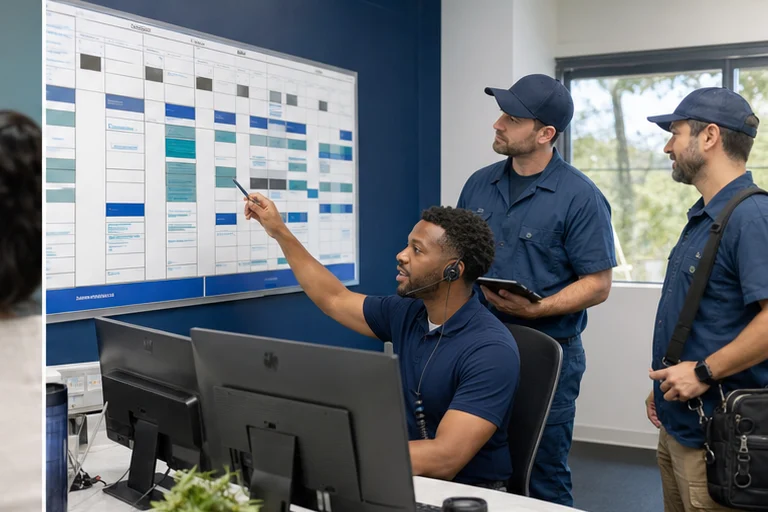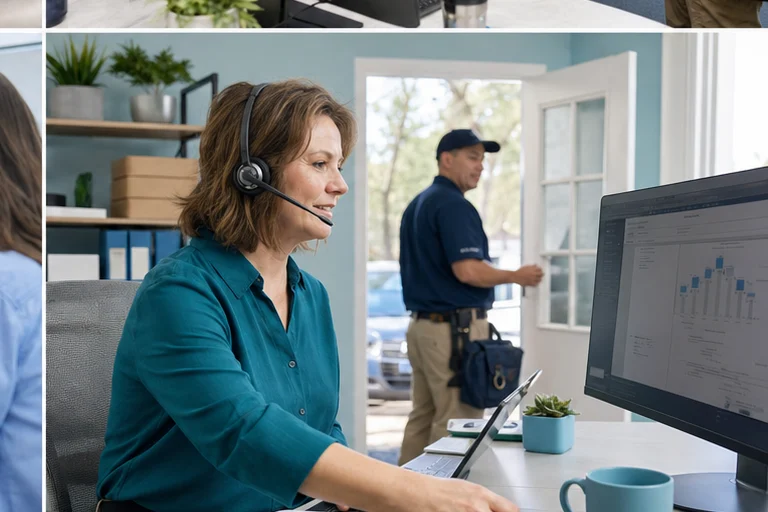



For a home-service company, the receptionist is part of the operating system. The call affects qualification, schedule capacity, dispatch, customer expectations, and revenue. An AI receptionist should therefore be designed as a bounded workflow, not a talking FAQ page.
Why this matters now
The system can answer common calls, collect details, offer approved appointments, recover missed calls, and create summaries. It should transfer or assign calls when the situation needs technical judgment, complaint handling, safety decisions, or a high-value human conversation.
An AI receptionist is useful when it can finish routine intake and expose the calls that need judgment. It should never make technical promises, hide uncertainty, or leave the office guessing what the customer was told.
Where the workflow usually fails
Natural voice without useful action
A pleasant conversation still fails if no booking, task, or owner appears afterward.
Overpromising capability
The assistant should not diagnose equipment, guarantee arrival, or invent price and policy.
Weak transfer context
A human should receive the caller, reason, urgency, details collected, and what the caller has already heard.
A better operating path
Design the call around a small set of approved outcomes: answer a known question, qualify and book eligible work, create a complete callback, or transfer an exception. Every path should write the conversation result into the team's operating queue.
- Map call reasonsUse actual recordings and staff knowledge to rank common paths.
- Approve questions and answersKeep language short and aligned with business policy.
- Connect the next actionBook, transfer, text, email, create a task, or update the CRM.
- Monitor real callsReview failures, exceptions, and caller friction after launch.
Test interruptions, background noise, a customer who asks for a person, an unknown service, a safety concern, and a calendar failure. The workflow should acknowledge limits quickly and preserve the facts already collected for the handoff.
What to measure
Measure resolved routine calls and the quality of human handoffs separately. A short call that creates an incomplete job or a frustrated transfer has not reduced work for the office.
- Calls reaching a completed next step
- Human transfers with complete context
- Bookings or tasks requiring correction
Sample recordings and records by call type each week. Compare what the customer heard with what staff received, then adjust approved answers, transfer triggers, and booking questions.
The implementation decision
Launch with the call types the business understands best. Add complexity after real conversations show that the first paths are reliable.
Implementation checklist
- Define routine questions the workflow may answer
- List services and situations that require a person
- Approve qualification, booking, disclosure, and transfer language
- Connect the phone path to the operating queue or system
- Test interruptions, uncertainty, and unavailable staff
- Review recordings, handoffs, corrections, and customer requests
Field checks before launch
For AI receptionist implementation for home services, start with the operating facts that determine a usable outcome: greeting, service type, location, urgency, caller details, approved FAQs, booking policy, transfer rules, and the exact notes required by dispatch. Write down which system owns each fact, which answers are required, and what the customer may be promised.
The receptionist can follow approved intake and scheduling paths. It should not diagnose technical problems, promise unapproved arrival times, or keep a caller in automation when human judgment is needed. Document that boundary in the script, interface, and fallback path so staff can understand why a request was booked, routed, or held for review.
Run realistic acceptance tests before launch, including no-cooling calls, active leaks, existing appointments, price questions, upset customers, unavailable staff, after-hours transfers, and callers who provide incomplete information. Record the expected customer message, destination record, owner, and recovery action for each case. After launch, review corrections and exceptions with the people who operate the workflow; those examples show where rules, access, or training need to change.
- Define call reasons, required questions, and permitted next actions
- Approve voice, disclosure, recording, and escalation requirements
- Test interruptions, background noise, unavailable staff, and repeats
- Monitor transfers, booking corrections, and incomplete call records
Implement a receptionist workflow with clear limits.
Agentic Growth can map call types, configure the approved answering and booking paths, connect supported systems, and test human transfers before launch.
Frequently asked questions
What can an AI receptionist handle for a home-service company?
It can handle approved routine questions, collect intake details, book eligible work, create callbacks, and route defined exceptions. The exact scope comes from the client's rules.
What happens when the caller asks for a person?
The workflow should follow the approved transfer or callback path without arguing with the request. Any details already collected should accompany the handoff.
Does Agentic Growth provide the receptionist software?
Agentic Growth is an implementation service provider. We configure appropriate calling tools and supported connections around the client's approved call process.